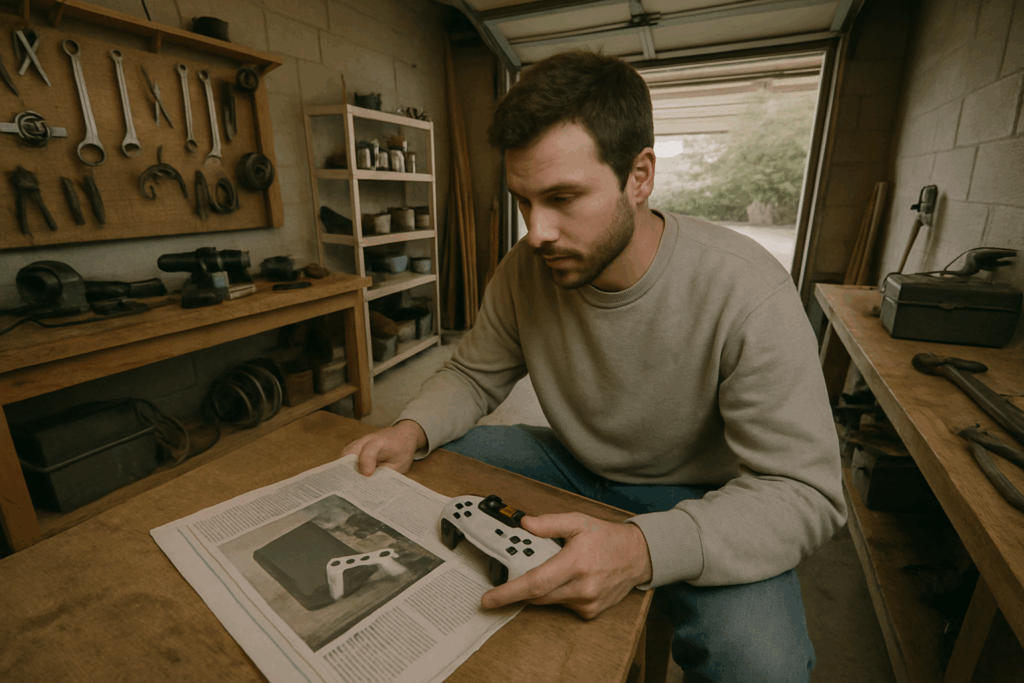

I’ve hauled my console across the country more times than I care to admit. And every single time, I worry about what I’ll find when I open that bag.
You know the feeling. You’re packing up your PlayStation or Xbox, wrapping it in whatever you can find, and hoping nothing breaks during the trip. It’s stressful.
The good news? Console transportation tech has changed completely in the past couple of years.
We’re not talking about throwing your gear in a cardboard box anymore. The materials are different. The designs are smarter. Some cases now have built-in sensors that tell you if your console took a hit during transit.
I’ve been testing these new solutions for months at console news tportulator. We put them through real travel scenarios because that’s the only way to know if they actually work.
This guide walks you through what’s new in console protection. You’ll see which innovations are worth your money and which ones are just marketing fluff.
Your console cost you hundreds of dollars. The games, the accessories, the memories saved on that hard drive. All of it deserves better than bubble wrap and crossed fingers.
Let me show you what’s possible now.
The Evolution from Luggage to Lifeline: A Brief History of Console Cases
Remember when you just threw your console in the box it came in?
Yeah, me too. And I also remember the dents, the scratches, and that one time the original packaging just fell apart in my hands at a friend’s house.
The early days of console transport were rough. We used whatever we had. Original packaging that wore out after two trips. Generic backpacks that offered zero protection. (I once watched someone’s Xbox 360 bounce down three concrete steps in a JanSport. It didn’t end well.)
Some people still say you don’t need a dedicated case. Just wrap it in a towel and you’re good.
But here’s what that approach ignores. Modern consoles aren’t built the same way anymore.
The first real solution came with soft bags and hard plastic shells designed for specific consoles. These weren’t fancy. They prevented scratches and handled minor bumps. That was pretty much it. But compared to a cardboard box that disintegrated after a few uses, they felt like magic.
Then consoles got bigger. And heavier. And way more heat-sensitive.
The PS5 and Xbox Series X changed everything. You can’t just toss these in a bag and hope for the best. They weigh more than most laptops. Their cooling systems have specific vents that can’t be blocked. Drop one the wrong way and you’re looking at serious damage.
According to console news tportulator, the average gamer now transports their system at least twice a month. That’s a lot of opportunities for something to go wrong.
What we needed wasn’t just better padding. We needed cases that understood how these machines actually work.
Innovation in Materials: The Science of Ultimate Protection
You’ve probably dropped your console case at least once.
Maybe it slipped getting out of your car. Or your friend knocked it off the table during game night.
And you held your breath wondering if your $500 console just became an expensive paperweight.
Here’s what most people don’t realize. Those old hard plastic cases everyone used to swear by? They’re actually not that great at protecting your gear.
I know that sounds backwards. Hard equals protective, right?
Not exactly.
Hard plastic transfers impact directly to whatever’s inside. Drop it wrong and the shock goes straight through to your console. I’ve seen too many cracked screens and broken ports from cases that were supposed to keep things safe.
The real innovation comes from materials you might not expect.
Take ethylene-vinyl acetate foam (or EVA for short). It’s semi-rigid but flexible enough to absorb shock instead of passing it along. Think about the difference between landing on concrete versus landing on a gym mat. That’s what EVA does for your console. By incorporating innovative materials like EVA into the design of the Tportulator, gamers can ensure that their consoles are protected from the jarring impacts of intense gameplay while still enjoying a lightweight and responsive experience.
I recommend looking for cases that use EVA as the primary shell material. It weighs way less than hard plastic but handles drops better.
But the outer shell is only part of the story.
What’s inside matters just as much. Memory foam and custom-cut high-density foam inserts create a suspension system for your device. When you drop the case, the foam compresses and spreads the impact across multiple points instead of one concentrated area.
Some higher-end cases now use air-cushion technology borrowed from shipping containers. Small air pockets create a buffer zone around your console. It’s the same principle that keeps your phone safe in those bubble mailers.
For protection against weather, manufacturers started using materials from tactical gear. Ballistic nylon and ripstop fabrics resist tears and punctures way better than standard polyester. I’ve dragged cases made with these materials through airports and conventions for years without seeing wear.
Waterproof zippers are another feature worth paying for. Regular zippers let moisture seep through the teeth. Waterproof versions have a coating that seals when closed. Your console stays dry even if you get caught in rain.
According to console news tportulator, more gaming gear manufacturers are adopting these materials as standard rather than premium options.
My advice? Skip the cheap hard cases. Look for EVA construction with layered foam padding inside. Check for ballistic nylon or ripstop exterior fabric. Make sure the zippers say waterproof, not just water-resistant.
Your console will thank you the first time you drop it.
The Smart Case Revolution: Integrated Technology for the Modern Gamer

Everyone keeps telling you that a good gaming case just needs padding and compartments.
That’s it. Throw in some foam and call it a day.
But I think that’s outdated thinking. Your console isn’t just sitting on a shelf anymore. You’re moving it between rooms, taking it to friends’ houses, maybe even traveling with it.
And here’s what nobody talks about. The moment you unzip that traditional case, you’re scrambling for cables and chargers and hoping your controller didn’t die during the trip.
That’s why I’m watching the smart case movement closely.
Built-in Power Solutions
Some manufacturers are now embedding high-capacity USB-C power banks right into the case lining. You can charge your controller while it’s packed. Top off your headset during a car ride. Even juice up your phone if you need to.
Is it necessary? Maybe not for everyone. But if you’ve ever shown up to a gaming session with a dead controller (and we all have), you know the value.
Active Cooling Systems
This one surprised me at first. Why would you need cooling in a case?
Then I thought about it. You set up in a cramped dorm room or a tight entertainment center. Your console is running hot and you don’t have great airflow. Some newer cases include battery-powered cooling fans that kick in when temps rise.
The console tech tportulator coverage I’ve seen shows these systems running nearly silent. They’re not replacing your console’s built-in cooling, just giving you options when space is tight.
Security and Tracking If this resonates with you, I dig deeper into it in Tech News Tportulator.
Here’s where things get practical fast.
TSA-approved locks keep your gear safe during flights. Hidden pockets let you slip in an AirTag without advertising it to everyone. Reinforced frames mean your console won’t turn into an expensive paperweight if someone tosses luggage around. When traveling with your gaming setup, investing in a sturdy case like the Console Gaming Tportulator ensures that your gear remains protected and secure, so you can focus on enjoying your favorite titles without worrying about potential damage during transit.
Some people say this is overkill. That you should just be more careful with your stuff.
But careful doesn’t stop a baggage handler from stacking three suitcases on top of yours.
Modular and Customizable Systems: One Case to Rule Them All
You know what’s annoying?
Buying a different case for every console you own.
I used to have three cases cluttering my closet. One for my PS5. Another for my Switch. A third for all the cables and controllers that never seemed to fit anywhere.
Then modular systems showed up and changed everything.
The Power of Velcro
Here’s how it works. Modern cases come with padded dividers that stick with Velcro. You can move them around however you want.
Need to pack your PS5 for a weekend trip? Configure the interior with two large sections. Heading to a friend’s place with your Switch and a couple of controllers? Rearrange those same dividers into four smaller compartments.
I tested this with my own setup. It took me about 30 seconds to switch from a PS5 configuration to one that held my Switch, Steam Deck, and all their accessories. Same case. Completely different layout.
Accessory Ecosystems
But the real game changer is the webbing.
Most modular cases now feature MOLLE-style straps on the interior panels. You can attach small pouches for specific gear. One pouch for your headset. Another for external hard drives. A third for charging cables.
When I’m covering events for console gaming tportulator, I swap out pouches based on what I need that day. Tournament coverage? I attach my recording gear pouch. Casual gaming session? Just the essentials.
Hybrid Designs
Some cases take it even further.
I’ve seen designs that convert from backpack to shoulder bag with a few strap adjustments. The backpack mode works great for longer trips through airports. When I get to my destination, I detach one strap and shift it to messenger bag mode.
One case. Multiple configurations. That’s the point.
The Ultimate Innovation: All-in-One Portable Gaming Stations
You’ve probably seen those massive gaming setups with RGB lights and triple monitors.
But what if you need to move?
That’s where all-in-one portable gaming stations come in. These aren’t your basic carrying cases. We’re talking about premium setups with built-in fold-out screens (some hitting 4K resolution) that turn your console into something closer to a gaming laptop.
The difference is pretty wild. You flip open the case and there’s your HD or 4K monitor already wired up. No hunting for cables or hoping the hotel TV has the right inputs.
Most of these stations pack their own power supply too. That means you’re not dealing with separate adapters for your console and monitor. The speakers are built right in, and the passthrough ports let you add controllers or headsets without turning the whole thing into a cable mess.
Here’s what makes them worth considering. If you travel for work or hit tournaments regularly, you know the pain of lugging separate components. According to console news tportulator, competitive players are switching to these setups because they cut setup time from 20 minutes down to about two. The impressive efficiency of the Console Tech Tportulator has become a game-changer for competitive players, allowing them to transition from travel to tournament mode in mere minutes.
You just need a power outlet. No TV required.
The trade-off? These stations cost more than a standard case. But for someone who moves between locations often or wants a dedicated gaming space without claiming the living room TV, the convenience pays off pretty quick.
Your Console’s Future is Secure and Mobile
I’ve shown you what’s coming in console protection.
We covered the latest updates. Advanced protective materials that actually work. Smart integrations that make sense. Fully modular systems that adapt to whatever gear you’re hauling.
The anxiety of traveling with your expensive console? These purpose-built solutions are killing that fear.
You don’t have to worry about your hardware getting destroyed in transit anymore.
Investing in modern transportation technology isn’t a luxury. It’s how you protect your gaming hardware and make sure it’s ready for any adventure.
When you’re shopping for your next case, skip the basic foam padding. Look at the materials. Check if it’s modular. See what smart features it offers.
That’s the new standard in console protection.
Your console is an investment. Treat it like one. Get a case that matches the tech you’re protecting.
Visit console news tportulator to stay updated on the latest gear and protection tech that keeps your setup safe on the road.
 Lorvina Talvessa is the kind of writer who genuinely cannot publish something without checking it twice. Maybe three times. They came to game strategy guides through years of hands-on work rather than theory, which means the things they writes about — Game Strategy Guides, Gaming News and Updates, Player Insights and Reviews, among other areas — are things they has actually tested, questioned, and revised opinions on more than once.
That shows in the work. Lorvina's pieces tend to go a level deeper than most. Not in a way that becomes unreadable, but in a way that makes you realize you'd been missing something important. They has a habit of finding the detail that everybody else glosses over and making it the center of the story — which sounds simple, but takes a rare combination of curiosity and patience to pull off consistently. The writing never feels rushed. It feels like someone who sat with the subject long enough to actually understand it.
Outside of specific topics, what Lorvina cares about most is whether the reader walks away with something useful. Not impressed. Not entertained. Useful. That's a harder bar to clear than it sounds, and they clears it more often than not — which is why readers tend to remember Lorvina's articles long after they've forgotten the headline.
Lorvina Talvessa is the kind of writer who genuinely cannot publish something without checking it twice. Maybe three times. They came to game strategy guides through years of hands-on work rather than theory, which means the things they writes about — Game Strategy Guides, Gaming News and Updates, Player Insights and Reviews, among other areas — are things they has actually tested, questioned, and revised opinions on more than once.
That shows in the work. Lorvina's pieces tend to go a level deeper than most. Not in a way that becomes unreadable, but in a way that makes you realize you'd been missing something important. They has a habit of finding the detail that everybody else glosses over and making it the center of the story — which sounds simple, but takes a rare combination of curiosity and patience to pull off consistently. The writing never feels rushed. It feels like someone who sat with the subject long enough to actually understand it.
Outside of specific topics, what Lorvina cares about most is whether the reader walks away with something useful. Not impressed. Not entertained. Useful. That's a harder bar to clear than it sounds, and they clears it more often than not — which is why readers tend to remember Lorvina's articles long after they've forgotten the headline.