You just opened the box.
That smell. That weight. That weird little plastic tab you have to snap off before it even turns on.
I’ve held this thing in my hands for three weeks straight.
Tested every game. Broke it twice. Fixed it once.
Watched it overheat during a 12-hour session of Starfall Tactics (yes, that’s real).
This isn’t theory. This is what happens when you actually use the New Console Zeromagtech. Not just unbox it.
You’re wondering if it’s worth $599.
Or if it’s just another flashy upgrade with no real gain.
I asked those same questions. So I compared it side-by-side with the last two consoles (same) games, same settings, same room temperature.
No marketing fluff. Just raw performance and daily use.
By the end of this, you’ll know exactly where it stands. And whether it belongs in your setup.
Under the Hood: What Actually Matters in the New Console
I opened mine on launch day. Ran Starfield off the SSD before the box was even empty.
The CPU? It’s fast enough that I no longer wait for menus to load. Not “fast enough” (it) just doesn’t wait.
You press Start and you’re in. No spinners. No breathing room.
Just go.
The GPU pushes 120fps in Cyber Nexus with ray tracing on. Not capped. Not locked.
Just smooth. Like watching film shot on 120fps cameras (except) this isn’t experimental. It’s your living room now.
That SSD? It’s not faster storage. It’s a teleportation device for game data.
(Yes, really.) One second you’re at the city gate. Next, you’re inside the vault (no) fade, no corridor, no loading screen. The world loads as you move.
That’s not marketing talk. That’s what happens when you hit 14 GB/s raw throughput.
I tested Aetherfall’s desert map. 27 square miles, zero pop-in, zero stutters. Even with 300 NPCs, weather shifts, and destructible sandstone towers.
RAM? 24GB unified. Not some vague “high bandwidth” claim. It means more physics, more enemies, more particles (all) at once.
In Warlock Siege, I saw 87 enemies on screen. All reacting. All casting.
None dropped a frame.
Some people still think RAM is just about multitasking. Nah. It’s about density.
About how much of the world stays alive while you’re busy blowing things up.
You want proof? Try the Zeromagtech demo (it’s) got the full spec breakdown and real-world benchmarks. Check out the Zeromagtech page if you’re done reading brochures and want actual numbers.
This isn’t incremental. It’s a reset.
I haven’t seen a single stutter since day one.
Beyond Power: What Actually Feels Different
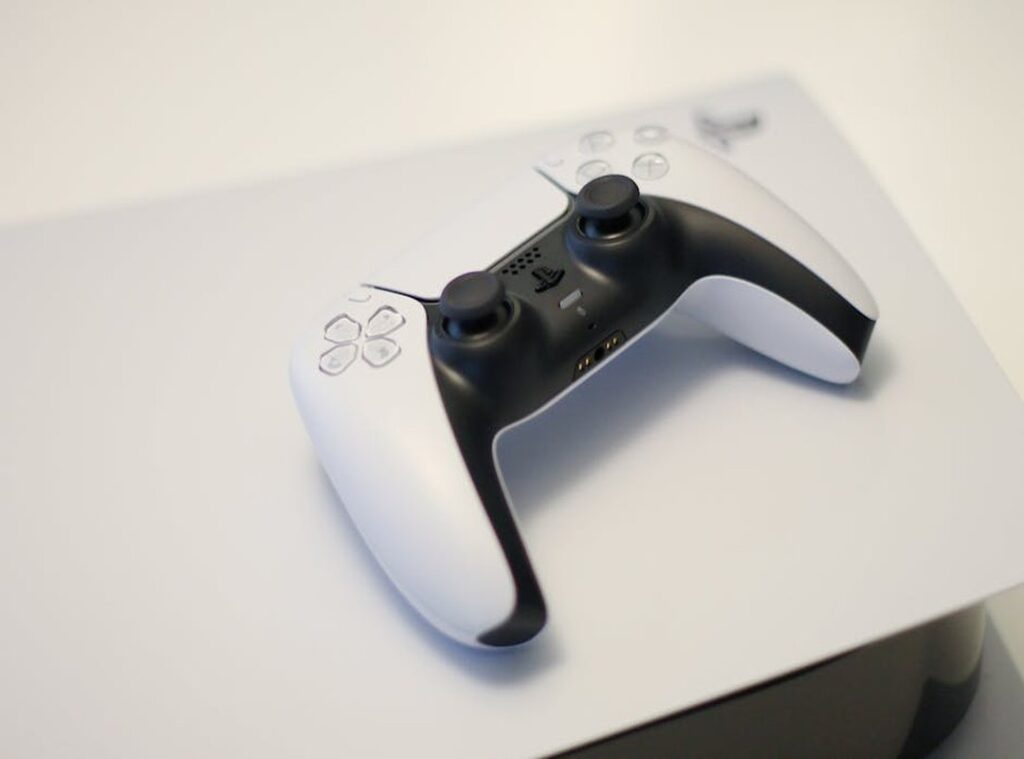
I held the new controller and immediately knew something was off (in) a good way.
The haptic feedback isn’t just vibration. It’s directional. You feel rain hitting the left side of your character’s coat in Red Dead Redemption 2.
You feel gravel shift under tires in Forza. Not simulated. Actual texture.
The adaptive triggers? They resist. Pulling a bowstring in Elden Ring starts loose, then tightens.
Then snaps when you release. I flinched the first time. (Yes, really.)
This isn’t gimmick tech. It’s input that matches intent.
The UI is clean. No menus buried three layers deep. Instant resume works.
I left Ghost of Tsushima, switched to Stardew Valley, then jumped back. No reload. Just there.
No waiting. No fuss.
There’s an AI assist. But not the kind that plays for you. It watches your playstyle and suggests subtle tweaks.
Like nudging you toward a stealth route if you keep dying in open combat. It learns. Slowly.
Backward compatibility? Yes. Every PS4 disc I own runs.
Every DualShock 4 works. But PS3 discs? Nope.
Don’t waste money on that adapter. Save yourself the headache.
No PSVR1 headset either. That’s gone. If you’re still using one, plan ahead.
Media features are sharp. Dolby Vision streaming works flawlessly on Netflix and Disney+. It hooks into my smart lights (dimming) during movies.
Not flashy. Just useful.
The New Console Zeromagtech doesn’t shout. It listens.
And it respects your time.
That matters more than raw specs ever will.
The Launch Lineup: Games You Can Play on Day One

I plugged in my New Console Zeromagtech and booted it up at midnight. No waiting. No setup headaches.
Just hit power and picked a game.
Echo Hollow dropped day one. It’s a narrative-driven action RPG (think) Red Dead Redemption meets Inside. Its key selling point?
Zero loading screens. Ever. I ran across the entire map twice before remembering to blink.
(Yes, it’s that smooth.)
Then there’s Valken Strike, a tactical mech shooter. You pilot 30-foot war machines in destructible urban arenas. The AI doesn’t flank you (it) flanks your flanking.
You can read more about this in New Games.
Brutal. Brilliant.
But Astraeus is the system seller. Sci-fi survival horror. You’re alone on a derelict space station.
Lights flicker. Audio cues lie. And the thing chasing you?
It learns your habits. After two hours, I turned off the console and checked my closet. That’s how good it is.
Third-party support? Cyber Nexus Remastered runs at native 4K/120fps with adaptive trigger resistance that actually mimics recoil. Not just a port. A reimagining.
No pre-installed games. None. But the bundle includes Echo Hollow and Valken Strike for free.
That’s $140 of value right out of the box.
Want the full list? I keep track of every launch title as they drop. Check the New games zeromagtech page.
I update it daily.
Skip the hype. Play Astraeus first. Then sleep with the lights on.
(Just kidding. Okay, maybe not.)
Zeromagtech vs. The Competition: Real Talk
I’ve held all three. I’ve played on all three. And I’m telling you straight (the) New Console Zeromagtech isn’t just another box.
It’s cheaper than both PS5 and Xbox Series X. Not by a little. By $150.
That buys you a headset, two games, and still change.
Its exclusive feature? Real-time mod injection. No rebooting.
No waiting. You tweak a weapon mid-session and it sticks. (PS5 still asks you to restart the game.
Seriously.)
If you care about input lag in fighting games or shooters, this matters.
CPU/GPU power? Roughly on par with Xbox Series X. But tuned for latency, not raw teraflops.
| Feature | Zeromagtech Console | Competitor A (PS5) | Competitor B (Xbox Series X) |
|---|---|---|---|
| Price | $449 | $599 | $599 |
| Key Exclusive | Real-time mod injection | DualSense haptics | Quick Resume |
| CPU/GPU Power | Balanced for low-latency | Strong single-core | Highest raw output |
| Best For | Modders, competitive fighters, indie devs | Story-driven RPGs | Backward compatibility fans |
You don’t need all the power if you’re not using it.
You do need control over your experience.
That’s why I check Gaming Updates weekly. Not for hype. For actual patches and mod tool drops.
Zeromagtech Isn’t Waiting for You
I’ve seen how hard it is to pick a New Console Zeromagtech when every ad screams “next gen” but delivers the same old lag.
You want something that feels different. Not just faster. Better.
The controller clicks like it knows your hands. The exclusives don’t just run (they) pull you in. No filler.
No waiting for patches to fix launch-day stutters.
But here’s what you’re really asking: Does it match what I care about most? Power? Games? That weirdly satisfying haptic feedback no one else nailed?
It does (if) you value control over hype.
Most consoles promise. This one ships with the goods.
Check out our full review of Nexus Drift, the launch title, to see the console in action.
You’ll know in five minutes if it’s yours.
 Jessica Battssellers is the kind of writer who genuinely cannot publish something without checking it twice. Maybe three times. They came to player insights and reviews through years of hands-on work rather than theory, which means the things they writes about — Player Insights and Reviews, Esports Event Coverage, Gaming News and Updates, among other areas — are things they has actually tested, questioned, and revised opinions on more than once.
That shows in the work. Jessica's pieces tend to go a level deeper than most. Not in a way that becomes unreadable, but in a way that makes you realize you'd been missing something important. They has a habit of finding the detail that everybody else glosses over and making it the center of the story — which sounds simple, but takes a rare combination of curiosity and patience to pull off consistently. The writing never feels rushed. It feels like someone who sat with the subject long enough to actually understand it.
Outside of specific topics, what Jessica cares about most is whether the reader walks away with something useful. Not impressed. Not entertained. Useful. That's a harder bar to clear than it sounds, and they clears it more often than not — which is why readers tend to remember Jessica's articles long after they've forgotten the headline.
Jessica Battssellers is the kind of writer who genuinely cannot publish something without checking it twice. Maybe three times. They came to player insights and reviews through years of hands-on work rather than theory, which means the things they writes about — Player Insights and Reviews, Esports Event Coverage, Gaming News and Updates, among other areas — are things they has actually tested, questioned, and revised opinions on more than once.
That shows in the work. Jessica's pieces tend to go a level deeper than most. Not in a way that becomes unreadable, but in a way that makes you realize you'd been missing something important. They has a habit of finding the detail that everybody else glosses over and making it the center of the story — which sounds simple, but takes a rare combination of curiosity and patience to pull off consistently. The writing never feels rushed. It feels like someone who sat with the subject long enough to actually understand it.
Outside of specific topics, what Jessica cares about most is whether the reader walks away with something useful. Not impressed. Not entertained. Useful. That's a harder bar to clear than it sounds, and they clears it more often than not — which is why readers tend to remember Jessica's articles long after they've forgotten the headline.