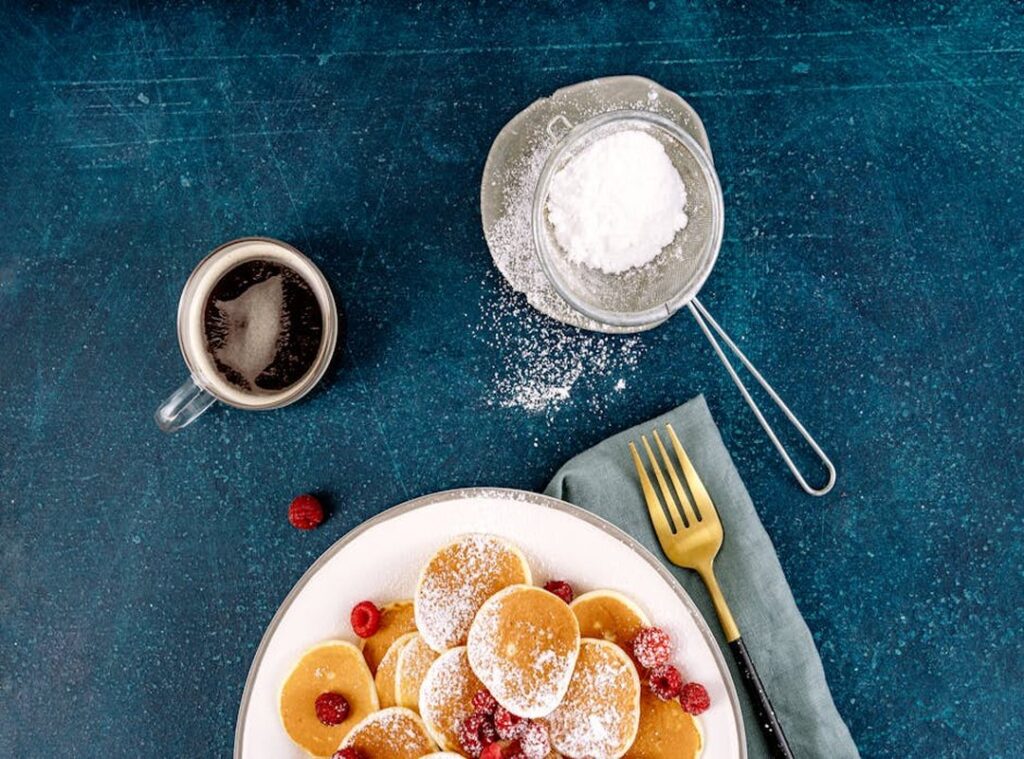
The aroma of semolina fills the air, and the sizzling batter on the griddle makes my mouth water. Fresh mint tea steams in small glasses, adding a touch of freshness to the morning.
Baghrir, the spongy, crater-filled pancake, and Msemen, the flaky, square-shaped flatbread, are the stars of the Moroccan breakfast table.
You’ve probably tried to make these at home, right? And ended up with flat, dense, or unevenly cooked pancakes. It’s frustrating, isn’t it?
The secret lies in the baghrir kookmutsjes—specific, traditional cookware designed for this purpose.
This guide will show you which molds to use and explain the cultural significance and techniques needed to transform your breakfast into an authentic Moroccan experience.
Beyond the Batter: Understanding Baghrir and Msemen
Let’s start with Baghrir, the ‘thousand-hole pancake.’ Its unique texture comes from a yeasted semolina batter. The holes are crucial for soaking up honey and melted butter.
The cooking surface’s material and heat distribution directly impact the formation of these signature holes. A well-seasoned cast-iron pan, for example, distributes heat evenly, creating the perfect environment for those little craters to form.
- Use a cast-iron or non-stick pan.
- Preheat the pan properly.
- Pour the batter in a thin, even layer.
Now, let’s talk about Msemen. This laminated, square pancake has a chewy, layered texture. It’s achieved by folding dough with oil and semolina.
While Msemen doesn’t use a ‘mold’ in the same way, the type of flat, heavy-bottomed pan is critical for achieving the golden-brown, flaky finish. A traditional Moroccan baghrir kookmutsjes can make all the difference.
These pancakes are not just breakfast treats. They’re a staple during afternoon tea and especially during the holy month of Ramadan. Their cultural importance can’t be overstated.
The recipe is only half the battle; the right cooking vessel is the other essential half.
A Buyer’s Guide to Authentic Moroccan Pancake Molds & Pans
When it comes to making authentic Baghrir, the traditional molds are a must. I’m talking about terracotta or clay pans. These baghrir kookmutsjes have a porous nature that distributes heat gently and evenly, which is perfect for creating those signature bubbles.
But let’s be real. Using clay molds isn’t all sunshine and rainbows. They offer unmatched authenticity and a unique flavor, but they also require seasoning, can be fragile, and need careful heat management.
It’s like having a pet rock that you need to baby.
If you’re not up for the extra care, modern alternatives like cast iron or heavy-duty non-stick pans with multiple small indentations are worth considering. They’re easier to use and maintain, and they still give you a great final texture. Just don’t expect the same level of authenticity.
For Msemen, you’ll want a wide, heavy-bottomed griddle (maqla). Cast iron or thick aluminum works best. The consistent heat helps cook those folded layers evenly.
It’s like giving your pancakes a spa treatment.
When buying, look for weight and material. A heavier pan usually means better heat distribution. And if you’re in the market, check out Middle Eastern markets or specialized online culinary stores.
You might even find some hidden gems there.
Pro tip: Before using a new clay or cast iron pan, season it. Rub it with oil and bake it in the oven. This prevents sticking and ensures longevity.
Trust me, your future self will thank you.
And hey, if you’re into debates, check out the microtransaction debate player perspectives. It’s a whole different kind of cooking, but just as heated!
From Pan to Plate: Mastering the Technique

Let’s dive into making perfect Baghrir and Msemen. Trust me, it’s all about technique and patience.
First up, Baghrir. You need a Baghrir mold or a non-stick pan. The key is medium-low heat.
Too much heat, and you’ll burn your pancakes. No one wants that.
Ladle the batter into the center of the pan. Don’t spread it; let it settle naturally, and watch for those bubbles.
They should form and dry out on the surface. Cook on one side only, and that’s right, just one side.
If no holes form, the batter might be too thick, or the pan isn’t hot enough. Adjust accordingly. If the bottom burns, turn down the heat.
Simple, right?
Now, for Msemen, and stretch the dough thinly. Fold it into a square.
Place it on a griddle and flip frequently. This encourages the layers to separate and puff up. Patience is key here.
The first one or two are often a test to get the temperature right.
Remember, practice makes perfect. And don’t forget, using BAGHRIR KOOKMUTSJES can make the process even easier. Happy cooking!
Bringing a Taste of Morocco to Your Kitchen
Authentic Moroccan pancakes are a product of both a great recipe and the right, time-honored tools. Using a traditional mold or the proper pan is not just about shape; it’s about achieving a texture that is fundamental to the dish.
Embarking on this culinary journey is more than just cooking; it’s about connecting with a rich and flavorful heritage. Imagine the aroma of baghrir kookmutsjes filling your kitchen, transporting you straight to the heart of Morocco.
Serve your homemade Baghrir or Msemen the classic way, drizzled with a warm mixture of honey and butter, alongside a fresh pot of mint tea.
 Jessica Battssellers is the kind of writer who genuinely cannot publish something without checking it twice. Maybe three times. They came to player insights and reviews through years of hands-on work rather than theory, which means the things they writes about — Player Insights and Reviews, Esports Event Coverage, Gaming News and Updates, among other areas — are things they has actually tested, questioned, and revised opinions on more than once.
That shows in the work. Jessica's pieces tend to go a level deeper than most. Not in a way that becomes unreadable, but in a way that makes you realize you'd been missing something important. They has a habit of finding the detail that everybody else glosses over and making it the center of the story — which sounds simple, but takes a rare combination of curiosity and patience to pull off consistently. The writing never feels rushed. It feels like someone who sat with the subject long enough to actually understand it.
Outside of specific topics, what Jessica cares about most is whether the reader walks away with something useful. Not impressed. Not entertained. Useful. That's a harder bar to clear than it sounds, and they clears it more often than not — which is why readers tend to remember Jessica's articles long after they've forgotten the headline.
Jessica Battssellers is the kind of writer who genuinely cannot publish something without checking it twice. Maybe three times. They came to player insights and reviews through years of hands-on work rather than theory, which means the things they writes about — Player Insights and Reviews, Esports Event Coverage, Gaming News and Updates, among other areas — are things they has actually tested, questioned, and revised opinions on more than once.
That shows in the work. Jessica's pieces tend to go a level deeper than most. Not in a way that becomes unreadable, but in a way that makes you realize you'd been missing something important. They has a habit of finding the detail that everybody else glosses over and making it the center of the story — which sounds simple, but takes a rare combination of curiosity and patience to pull off consistently. The writing never feels rushed. It feels like someone who sat with the subject long enough to actually understand it.
Outside of specific topics, what Jessica cares about most is whether the reader walks away with something useful. Not impressed. Not entertained. Useful. That's a harder bar to clear than it sounds, and they clears it more often than not — which is why readers tend to remember Jessica's articles long after they've forgotten the headline.