
Understanding Team Roles
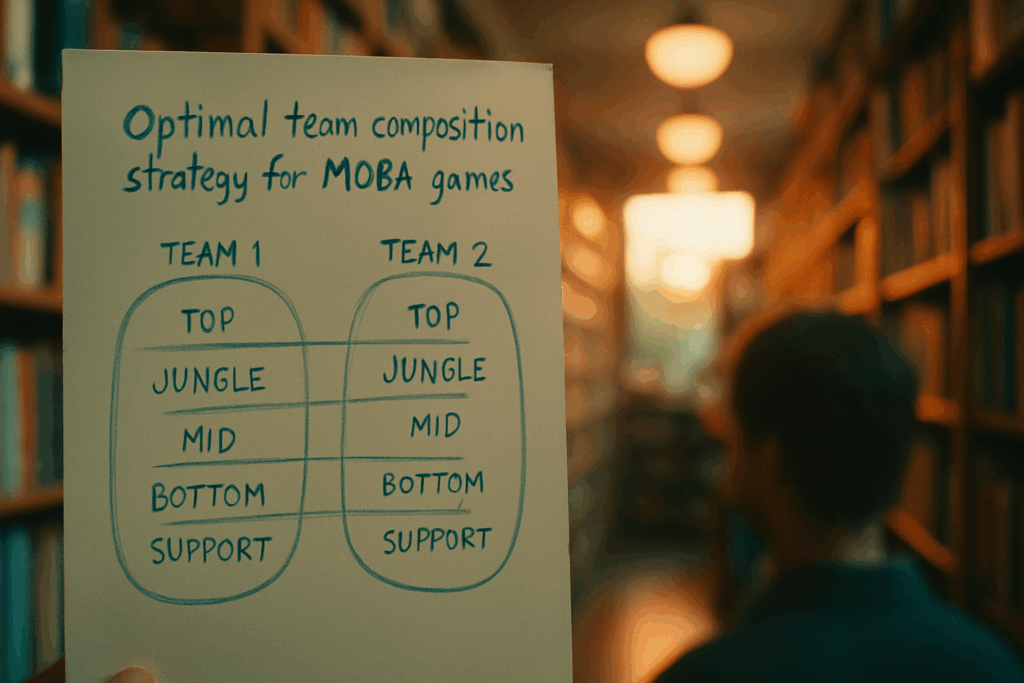
A well rounded team composition starts with knowing the foundational roles that define MOBA gameplay. Each role has a specific function that influences different phases of the match from the early laning phase to late game five man team fights. Getting this wrong means losing before the match truly begins.
Core MOBA Roles at a Glance
Here’s a quick breakdown of the standard roles found in most MOBAs:
Tank: Frontline initiator who soaks damage and controls team fights through crowd control (CC). Crucial for engaging or disengaging.
Support: Provides healing, shields, buffs, or utility vision. Keeps teammates alive and creates opportunities without soaking resources.
Marksman (ADC): High sustained damage dealer, usually ranged. Key damage source in late game team fights.
Assassin: Burst damage specialist for quickly eliminating priority targets. Ideal for picking off squishies in backlines.
Mage: Magic damage caster with ranged poke, AoE abilities, or crowd control. Often sets the tone mid game.
Bruiser (Fighter): Hybrid of durability and damage. Fills the gap between Tank and Assassin roles, often strong in solo lanes or jungle.
Role Impact by Game Phase
Each character’s impact can shift throughout the game:
Laning Phase
Tanks and Supports focus on zoning or protecting carries.
Marksmen farm safely under support cover.
Mages and Assassins begin to posture for mid lane dominance.
Bruisers look for early trades or pressure in side lanes.
Mid Game
Assassins and Mages come online as roamers and roam threats.
Supports must ward aggressively.
Tanks look for engage opportunities.
Team Fights (Late Game)
Tanks anchor the frontline and initiate.
Mages and Marksmen deal the main AoE and sustained damage.
Supports keep the main carries alive.
Assassins dive backlines to eliminate threats.
Bruisers act as secondary engage or help peel.
Balance Is Everything
Effective teams balance three core needs:
Utility: Stuns, slows, vision tools, debuffs these open or deny plays.
Damage Output: You need both burst (for picks) and sustain (for extended fights).
Crowd Control: Without reliable CC, team coordination becomes reactive and weaker.
Ignoring one of these elements leads to common draft failures:
Too much damage, no survivability.
Strong laning, but no teamfight presence.
No peel or engage tools, forcing reactive plays.
To build the perfect team, you must see drafting as about more than just raw power it’s about synergy, timing, and knowing the job each piece serves.
Drafting with Intention
Drafting isn’t just about picking what you’re good at. It’s about building something that works together a team that can win fights, push objectives, and scale when it matters. Comfort picks are fine when they plug into a broader plan. But blindly locking in your main without regard for synergy can sabotage your squad before the match even begins.
Good drafts look for combos first: crowd control chains, engage support duos, peel for the backline. Great drafts aim a step further flex picks that keep the enemy guessing, and layered damage profiles that keep your team relevant throughout all phases. The trap many fall into? Counterpicking so hard they forget teamwork. Picking a lane winner that doesn’t mesh with your comp’s playstyle just creates a fracture you’ll feel mid game.
Avoid common mistakes early: don’t stack squishies. Don’t forget wave clear. Don’t leave yourself without scaling or frontline. One dimensional lineups get punished hard. Know your team’s power spikes, cover your weaknesses, and always ask what part of the fight you’re drafting to win.
Flexibility is a weapon but only if you’re disciplined with it. A comp full of hybrids and generalists can fall flat if nobody knows who’s starting fights or who’s protecting the carry. Roles need to be clear. Flex when it fills gaps, not when it creates fog. At the highest level, clarity beats creativity every time.
Build a comp with purpose, not just preference. That’s how you enter the match already ahead.
Communication is Half the Win
Mechanics get you kills. Communication wins games. In serious MOBA play, shotcalling goes past just saying “go in.” Top tier teams assign tactical roles beyond the hero picks think engage lead, peel caller, or vision control coordinator. That doesn’t mean barking commands nonstop. It means someone has the mental map of cooldowns, teamfight spacing, and when to press.
You don’t need five shotcallers. You need one or two voices doing the heavy lifting while others focus sharp. Rotate those roles if needed, but establish them early ideally in champ select. It removes guesswork mid fight and keeps everyone aligned.
Now, let’s be honest: ego wrecks more games than trolls do. Everyone gets a turn carrying or feeding but when players are focused on outshining each other, basic objectives get left behind. Winning teams know when to back the hot hand… and when to pull it back. Normalize calling out misplays calmly and lifting solid plays harder.
In solo queue or random matches, cohesion is tougher but not impossible. Fast trust comes from clear, calm info early. Ping less spam, talk more useful. Mark jungle starts, flash timers, turret dive windows. Throw in something semi human like “we scale better” you’d be shocked how quickly strangers rally when the comms sound like you care about the win, not just the scoreboard.
Meta vs. Adaptability

The meta exists for a reason. It reflects what’s currently effective based on win rates, pro play, and patch adjustments. Ignoring it entirely is usually a fast track to getting steamrolled. But there’s a difference between following the meta and being chained to it. The best teams understand the current trends but don’t panic if they need to pivot.
Sometimes, going off meta works especially if you know what you’re doing and you’re leaning into team synergy. A surprise pick that fits a specific comp or playstyle can throw opponents off. But there’s a fine line between creativity and chaos. Off meta isn’t an excuse to lock in underpowered picks that make your lineup collapse by mid game. You still need roles filled, CC available, and damage scaling considered.
To stay ahead, read patch notes with purpose. Don’t just skim for buffs or nerfs. Ask: how does this change impact lane matchups, objective control, or late game team fights? If your go to support champ just lost mobility, maybe your comp now needs peel elsewhere. Adapt formations accordingly.
Flexibility doesn’t mean randomness it means applying meta knowledge with intention.
Expert Level Synergies and Combos
Some duos aren’t just strong they’re built to take over. Think classic lane crushers like Thresh and Aphelios, or Lulu with hyper carries like Jinx. These pairings dominate early with pressure or utility, and then scale seamlessly into late game teamfight nightmares. The trick isn’t just raw stats it’s how their kits feed into each other. CC, peel, and damage rolled into one coordinated package.
On the pro stage, we’ve seen this executed to near perfection. Look at how T1 leveraged Karma + Ezreal for control lanes that snowball map control, or G2 using Sejuani setups with melee mid laners to guarantee early picks and objective pressure. These aren’t thrown together comps. They’re designed with intent every pick setting the stage for the next play.
Want to bring that to solo queue or ranked stacks? Focus less on ego picks and more on win conditions. Communicate in champ select. If your jungler locks in an early game bruiser, maybe skip the late scaling ADC and grab something that spikes mid game. Watch pro drafts and ask: what is their timeline? Who engages? Who follows up?
The best synergies come from clarity. You don’t need five pro level players you need five people who get the assignment. Play smart, draft like it matters, and you’ll find those perfect combos work just as well in ranked as they do on stage.
Where To Go Deeper
If you’re serious about mastering MOBA team composition, it’s time to go beyond the basics. We’ve broken it all down in our full guide the strategies, the mind games, the specific picks that elevate good squads into great ones. From role allocation to counter synergy, this is the tactical playbook for building a team that doesn’t just survive fights it controls them.
Get the full breakdown here: perfect MOBA team. We cover how smart drafts, balanced roles, and thoughtful chemistry turn solo talents into a unified threat. Whether you’re climbing ladder or prepping for a tournament, this guide locks in the essentials and then some.
Check it out: perfect MOBA team.
Stay Sharp
You can draft the most balanced, synergistic comp imaginable and still lose. Why? Because execution matters more than theory. The best team isn’t just well built it’s well played. Knowing your power spikes, engage distances, and win conditions means nothing if no one’s practiced connecting the dots in real time.
If you’re only drilling solo mechanics, you’re leaving wins on the table. Practice as a unit. Run scrims, replay breakdowns, or even just hop into casuals with your draft squad. Familiarity breeds cleaner rotations, better ult layering, and clutch peel plays when things fall apart.
And trust? That’s the real win condition. When you know your tank will pull the trigger, or that your support has your flank on cooldown, everything flows. You stop hesitating. You start winning. Coordination turns a good comp into a nightmare to play against and a dream to queue with.
 Jessica Battssellers is the kind of writer who genuinely cannot publish something without checking it twice. Maybe three times. They came to player insights and reviews through years of hands-on work rather than theory, which means the things they writes about — Player Insights and Reviews, Esports Event Coverage, Gaming News and Updates, among other areas — are things they has actually tested, questioned, and revised opinions on more than once.
That shows in the work. Jessica's pieces tend to go a level deeper than most. Not in a way that becomes unreadable, but in a way that makes you realize you'd been missing something important. They has a habit of finding the detail that everybody else glosses over and making it the center of the story — which sounds simple, but takes a rare combination of curiosity and patience to pull off consistently. The writing never feels rushed. It feels like someone who sat with the subject long enough to actually understand it.
Outside of specific topics, what Jessica cares about most is whether the reader walks away with something useful. Not impressed. Not entertained. Useful. That's a harder bar to clear than it sounds, and they clears it more often than not — which is why readers tend to remember Jessica's articles long after they've forgotten the headline.
Jessica Battssellers is the kind of writer who genuinely cannot publish something without checking it twice. Maybe three times. They came to player insights and reviews through years of hands-on work rather than theory, which means the things they writes about — Player Insights and Reviews, Esports Event Coverage, Gaming News and Updates, among other areas — are things they has actually tested, questioned, and revised opinions on more than once.
That shows in the work. Jessica's pieces tend to go a level deeper than most. Not in a way that becomes unreadable, but in a way that makes you realize you'd been missing something important. They has a habit of finding the detail that everybody else glosses over and making it the center of the story — which sounds simple, but takes a rare combination of curiosity and patience to pull off consistently. The writing never feels rushed. It feels like someone who sat with the subject long enough to actually understand it.
Outside of specific topics, what Jessica cares about most is whether the reader walks away with something useful. Not impressed. Not entertained. Useful. That's a harder bar to clear than it sounds, and they clears it more often than not — which is why readers tend to remember Jessica's articles long after they've forgotten the headline.