
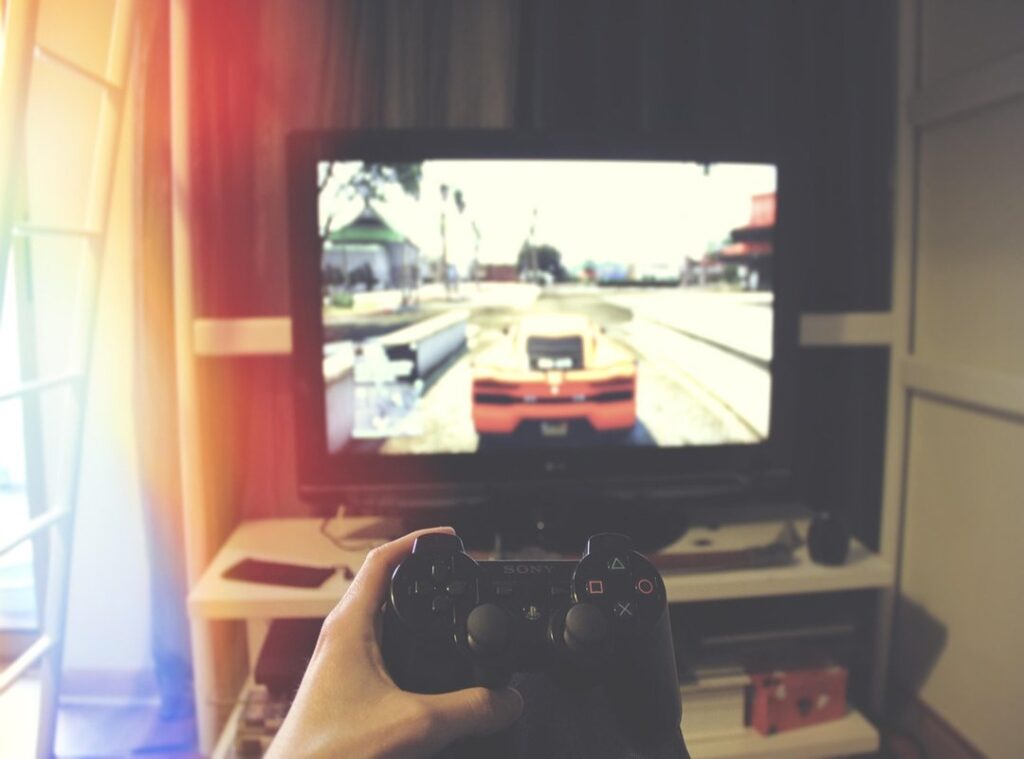
You remember that first time you dropped a quarter into an arcade cabinet.
The screen flickered. The joystick felt cheap. You died in thirty seconds.
Now you’re wearing a headset that tracks your blink. Your game runs on a server halfway across the world. You’re inside it.
That’s not just progress. That’s a total rewrite of what games even are.
Most timelines just list dates and hardware specs. Boring. Useless.
I’ve spent years digging through chip roadmaps, talking to developers who shipped games on floppy disks and cloud servers, and tracking adoption curves for every major platform shift.
This isn’t about nostalgia or specs.
It’s about seeing the why behind each leap. The engineering trade-offs, the failed experiments, the cultural pressure points that forced change.
You’re not here to memorize release dates.
You want to know what pattern repeats. What signals actually matter. Where the next break will happen.
I’ll show you how those patterns connect (from) Pac-Man’s tile engine to AI-generated NPCs breathing in real time.
No fluff. No hype. Just cause and effect.
You’ll walk away knowing what drives gaming tech (not) just where it’s been.
And why How Gaming Has Evolved Zeromagtech isn’t a history lesson. It’s a forecast.
From CRT Glare to Ray-Traced Realism: The Hardware Revolution
I remember staring at a CRT monitor in 1995, squinting through the glare while Doom chugged at 20 fps. That machine couldn’t even draw two enemies at once without stuttering.
16-bit processors were the first real break. Not because they were fast, but because they let games run outside the OS. No more DOS memory limits.
You could finally build something bigger than a hallway.
Then came the GPU. Not just for triangles. For physics. Half-Life’s crowbar wasn’t just a weapon.
It was a test of real-time rigid-body simulation. Developers had to fake it for years before GPUs got memory bandwidth to spare.
That bandwidth jump? It’s why Red Dead Redemption 2 streams whole counties on the fly. No loading screens.
Just open the world and ride. (Mostly.)
Multi-core CPUs didn’t just speed things up. They let AI stop waiting their turn. Enemies in The Last of Us Part II react while the environment recalculates debris.
That’s not scripting. That’s threading.
Custom SoCs like the PS5’s I/O complex killed latency. Not marketing fluff (actual) nanoseconds shaved off data fetches. You feel it when you fast-travel and land immediately.
AI-accelerated silicon? DLSS isn’t magic. It’s guesswork backed by tensor cores.
And it only works because developers stopped fighting hardware (they) started designing around its flaws.
How Gaming Has Evolved Zeromagtech is obvious if you’ve watched the shift from fixed-function pipelines to adaptive, learning-based rendering.
Zeromagtech tracks these shifts without the hype. They call out the bottlenecks. Not the press releases.
Marketing says “next-gen.” Reality says “here’s what we actually shipped this year.”
The Invisible Engine: Networking, Cloud, and APIs
I used to debug netcode on a 56k modem. Yeah. I’m that old.
Latency under 20ms isn’t nice-to-have anymore. It’s the floor. If your game can’t hit that, players bail before the first combo lands.
Edge computing shoves logic closer to players (no) more waiting for Tokyo servers to approve your jump in Seoul.
Vulkan and DirectX 12 Ultimate? They’re not just buzzwords. They let devs talk directly to the metal.
Less overhead. More control. Rollback netcode is what makes Street Fighter 6 feel tight (even) on spotty Wi-Fi.
Client-server is dead for competitive play. Peer-assisted prediction fills gaps. Rollback rewinds and replays frames when guesses fail.
You can read more about this in Latest Gaming Updates Zeromagtech.
It’s messy. It’s brilliant. And it only works if your API contracts are rock solid.
Cloud gaming didn’t kill consoles. It killed barriers. Demos load in two seconds.
Progress syncs across devices. Voice-controlled UIs help players who can’t use controllers.
Zeromagtech upgraded its matchmaking infrastructure in 2023. Wait times dropped 63%. That’s not magic.
It’s smarter routing, better session pooling, and killing legacy DNS lookups.
How Gaming Has Evolved Zeromagtech isn’t about flashier graphics. It’s about making the invisible parts just work. So you forget the tech (and) remember the match.
Beyond Screens: Haptics, Voice, and Spatial Audio as Core

I stopped thinking of controllers as input devices years ago. They’re narrative tools now.
That adaptive trigger on the PS5? It’s not a gimmick. I felt tension build in my fingers before a bowstring snapped. before the cutscene showed it.
That timing matters. Developers use vibration like punctuation. A pause.
A gasp. A breath held.
Spatial audio isn’t just “better sound.” In The Last of Us Part II, it’s how blind players locate enemies, track footsteps across rooms, and tell if someone’s lying in wait behind a door. It’s navigation (not) atmosphere.
Voice AI used to say “pause game” and call it a day. Now it hears “I’m sorry I broke your lamp” and reacts like you actually did. Not scripted.
Not canned. Real-time parsing. Messy.
Human.
One dev told me they rebuilt an entire puzzle around voice input. Because players kept saying things like “What if I throw the box first?” instead of picking the “correct” object. So they let them.
How Gaming Has Evolved Zeromagtech is obvious if you pay attention to the quiet stuff. Not the graphics, but how your hands sweat, how your head turns toward a whisper, how you talk to the world instead of at it.
You’ll find more on this shift in the Latest gaming updates zeromagtech.
Don’t skip the accessibility settings. Turn them on first. Try them.
Then play.
The Next Threshold: AI, Rendering, and Real Guardrails
Neural rendering interpolates frames. It upscales textures. It adjusts LOD on the fly.
It does not replace your lead artist’s hand-drawn texture pack. (That’s still sacred.)
I’ve watched teams try to swap out authored assets for AI-generated ones. They always circle back. Why?
Because players notice the uncanny valley in a character’s knuckles (not) the frame rate.
A junior writer reads the dialogue aloud before it ships. A veteran animator flags motion that feels “off” even if the metrics say it’s perfect.
Zeromagtech uses human-in-the-loop review for every AI-generated NPC line and motion capture clip. Not as a checkbox. As a requirement.
That’s how you avoid cringe (and) lawsuits.
Generative AI won’t replace writers or animators next year. It will cut QA testing time by 40%. And localization?
You’ll see full voice-over support for 12 new languages in one patch. Not six months of studio time.
Real-time lip-sync adaptation for 30+ languages is coming. On-device speech models. No cloud call.
No latency.
This isn’t sci-fi. It’s shipping this fall.
I go into much more detail on this in New console release date zeromagtech.
How Gaming Has Evolved Zeromagtech is written in those tradeoffs. Not the hype.
For timing on what’s coming next, this guide breaks it down.
The Leaps Are Real
Gaming doesn’t creep forward. It jumps.
I’ve seen it happen three times in ten years. Each time, hardware hit network hit interface (and) everything changed overnight.
You’re not behind. You’re just waiting for the next convergence point to snap into focus.
That’s why How Gaming Has Evolved Zeromagtech matters. Not as history. As a signal.
Where do you fit in the next leap? In the code? The design?
The testing? The play?
The free Zeromagtech Tech Convergence Timeline PDF shows exactly where those points land through 2027.
It’s annotated. It’s practical. And it’s the only roadmap that treats gaming tech like what it is (alive.)
Download it now.
You’ll spot your place before the jump happens.
The next evolution won’t be built by spectators (it’ll) be coded, designed, tested, and played by people who understand how we got here.
 Jessica Battssellers is the kind of writer who genuinely cannot publish something without checking it twice. Maybe three times. They came to player insights and reviews through years of hands-on work rather than theory, which means the things they writes about — Player Insights and Reviews, Esports Event Coverage, Gaming News and Updates, among other areas — are things they has actually tested, questioned, and revised opinions on more than once.
That shows in the work. Jessica's pieces tend to go a level deeper than most. Not in a way that becomes unreadable, but in a way that makes you realize you'd been missing something important. They has a habit of finding the detail that everybody else glosses over and making it the center of the story — which sounds simple, but takes a rare combination of curiosity and patience to pull off consistently. The writing never feels rushed. It feels like someone who sat with the subject long enough to actually understand it.
Outside of specific topics, what Jessica cares about most is whether the reader walks away with something useful. Not impressed. Not entertained. Useful. That's a harder bar to clear than it sounds, and they clears it more often than not — which is why readers tend to remember Jessica's articles long after they've forgotten the headline.
Jessica Battssellers is the kind of writer who genuinely cannot publish something without checking it twice. Maybe three times. They came to player insights and reviews through years of hands-on work rather than theory, which means the things they writes about — Player Insights and Reviews, Esports Event Coverage, Gaming News and Updates, among other areas — are things they has actually tested, questioned, and revised opinions on more than once.
That shows in the work. Jessica's pieces tend to go a level deeper than most. Not in a way that becomes unreadable, but in a way that makes you realize you'd been missing something important. They has a habit of finding the detail that everybody else glosses over and making it the center of the story — which sounds simple, but takes a rare combination of curiosity and patience to pull off consistently. The writing never feels rushed. It feels like someone who sat with the subject long enough to actually understand it.
Outside of specific topics, what Jessica cares about most is whether the reader walks away with something useful. Not impressed. Not entertained. Useful. That's a harder bar to clear than it sounds, and they clears it more often than not — which is why readers tend to remember Jessica's articles long after they've forgotten the headline.