
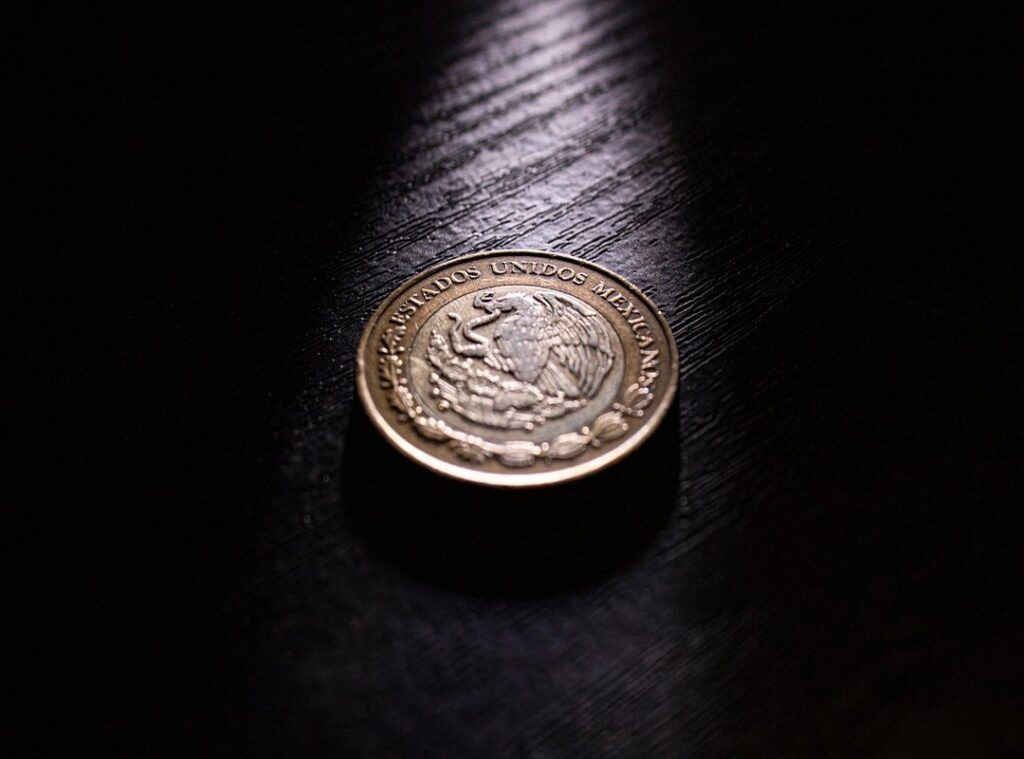
4,500 pesos mexicanos a chilenos is currently worth around 270,000 CLP. That’s the mid-market rate, but remember, the actual amount you get can vary. It depends on the fees and the service you use.
Exchange rates change every day. This is because of economic factors in both Mexico and Chile. So, it’s a good idea to keep an eye on them.
The goal here is to help you understand not just the current value, but also how to get the best possible rate. Whether you’re planning a trip, sending money to family, or making an online purchase, this guide will be useful.
By the end, you’ll know the conversion process inside and out. You’ll also learn how to avoid those pesky hidden fees. Let’s dive in.
Understanding the Mexican Peso to Chilean Peso Exchange Rate
An exchange rate is just a way to know how much one currency is worth in another. For the MXN/CLP pair, it tells you how many Chilean pesos (CLP) you get for one Mexican peso (MXN).
You might see different rates when you look up 4500 pesos mexicanos a chilenos. The mid-market rate is what you see on Google or other financial sites. It’s like the wholesale price of a product.
The tourist rate or buy/sell rate is what banks and exchange services offer. Think of it as the retail price. They add a little extra to make a profit, just like a store does.
Why are these rates different? Services add a spread to cover their costs and make money. It’s like buying a shirt at a boutique versus a factory outlet.
The boutique adds a markup, while the outlet sells closer to the wholesale price.
- Transfer fees
- Service charges
- Poor exchange rates (acting as a hidden fee)
Always check the total cost, not just the transfer fee. A low transfer fee with a bad exchange rate can end up costing more than a higher fee with a better rate.
Knowing this helps you avoid overpaying and get the most out of your money.
How to Calculate Your Conversion: A Step-by-Step Example
Calculating the conversion from Mexican Pesos (MXN) to Chilean Pesos (CLP) is straightforward. Here’s a step-by-step guide to help you do it right.
First, find the current, real-time MXN to CLP exchange rate from a reliable source like Reuters, XE, or Google Finance.
Next, use this simple formula: (Amount in MXN) x (Current CLP per MXN) = Amount in CLP. For example, if you have 4500 pesos mexicanos a chilenos and the exchange rate is 30 CLP per MXN, your calculation would be 4500 x 30 = 135,000 CLP.
Now, factor in a typical transfer fee. If there’s a flat fee of 1,000 CLP, subtract that from the final amount: 135,000 – 1,000 = 134,000 CLP.
Let’s see how a less favorable exchange rate impacts the final amount. Suppose the rate is 3% worse than the mid-market rate, making it 29.1 CLP per MXN. The new calculation would be 4500 x 29.1 = 130,950 CLP.
Subtract the same 1,000 CLP fee, and you get 129,950 CLP.
Comparing the results, you can see the importance of finding a good rate. The ideal conversion gives you 134,000 CLP, while a less favorable rate leaves you with 129,950 CLP. That’s a difference of 4,050 CLP, which adds up over time. 4500 pesos mexicanos a chilenos
The Best Ways to Convert and Send Money from Mexico to Chile

When it comes to converting and sending money, like 4500 pesos mexicanos a chilenos, you’ve got a few options. Each has its pros and cons, so let’s break them down.
Traditional banks are the go-to for many, and they offer security and familiarity. But here’s the catch: they come with high fees and poor exchange rates.
Plus, the processing times can be painfully slow. It’s like waiting in line at the DMV—nobody’s got time for that.
Online money transfer services, on the other hand, are a game-changer. Companies like Wise and Remitly offer lower fees, better exchange rates, and faster transfers. It’s like getting a VIP pass to a concert—worth every penny.
Then there are airport kiosks and physical currency exchanges. These are almost always the most expensive option. Sure, they’re convenient if you’re in a pinch, but for large amounts, they’re a no-go.
It’s like buying a bottle of water at the airport—way overpriced.
Comparison Summary
- Banks: Best for very large, complex transfers.
- Online Services: Ideal for most personal transfers.
- Airport Kiosks/Physical Exchanges: Only for small, urgent needs.
Here’s a practical tip: always get quotes from at least two different services before committing to a transfer. This way, you can ensure you’re getting a competitive rate. Trust me, it makes a difference.
What Drives Changes in the MXN to CLP Rate?
Exchange rates aren’t set in stone. They move around a lot, and that’s because of how the economies of both countries are doing.
Interest rates set by the central banks of Mexico and Chile play a big role. If one country raises its interest rates, it can make its currency more attractive, pushing up the exchange rate.
Economic stability and inflation are also major drivers. High inflation in one country can weaken its currency. For example, if Mexico has higher inflation than Chile, the 4500 pesos mexicanos a chilenos might not get you as much as before.
Major trade relationships and political events can cause short-term volatility too. A new trade deal or a sudden political shift can make the exchange rate jump or drop.
You don’t need to be an economist to understand this, but being aware of these factors helps. It gives you a better sense of why the rates change and how they might affect your money.
Getting the Most Value for Your 4,500 Pesos
The key to a good conversion is finding the service with the lowest fees and the exchange rate closest to the mid-market rate. For an amount like 4500 pesos mexicanos a chilenos, online transfer services typically offer the best value over traditional banks.
To ensure you get the best deal, follow this checklist: 1. Check the mid-market rate. 2, and compare 2-3 services. 3.
Calculate the final amount after all fees.
A few minutes of research can save you a significant amount of money on every transfer.
 Kylara Claytones writes the kind of gaming news and updates content that people actually send to each other. Not because it's flashy or controversial, but because it's the sort of thing where you read it and immediately think of three people who need to see it. Kylara has a talent for identifying the questions that a lot of people have but haven't quite figured out how to articulate yet — and then answering them properly.
They covers a lot of ground: Gaming News and Updates, Player Insights and Reviews, Upcoming Game Releases, and plenty of adjacent territory that doesn't always get treated with the same seriousness. The consistency across all of it is a certain kind of respect for the reader. Kylara doesn't assume people are stupid, and they doesn't assume they know everything either. They writes for someone who is genuinely trying to figure something out — because that's usually who's actually reading. That assumption shapes everything from how they structures an explanation to how much background they includes before getting to the point.
Beyond the practical stuff, there's something in Kylara's writing that reflects a real investment in the subject — not performed enthusiasm, but the kind of sustained interest that produces insight over time. They has been paying attention to gaming news and updates long enough that they notices things a more casual observer would miss. That depth shows up in the work in ways that are hard to fake.
Kylara Claytones writes the kind of gaming news and updates content that people actually send to each other. Not because it's flashy or controversial, but because it's the sort of thing where you read it and immediately think of three people who need to see it. Kylara has a talent for identifying the questions that a lot of people have but haven't quite figured out how to articulate yet — and then answering them properly.
They covers a lot of ground: Gaming News and Updates, Player Insights and Reviews, Upcoming Game Releases, and plenty of adjacent territory that doesn't always get treated with the same seriousness. The consistency across all of it is a certain kind of respect for the reader. Kylara doesn't assume people are stupid, and they doesn't assume they know everything either. They writes for someone who is genuinely trying to figure something out — because that's usually who's actually reading. That assumption shapes everything from how they structures an explanation to how much background they includes before getting to the point.
Beyond the practical stuff, there's something in Kylara's writing that reflects a real investment in the subject — not performed enthusiasm, but the kind of sustained interest that produces insight over time. They has been paying attention to gaming news and updates long enough that they notices things a more casual observer would miss. That depth shows up in the work in ways that are hard to fake.